Posted in Uncategorized

Finding Non-Conformance in Plastering Inspection

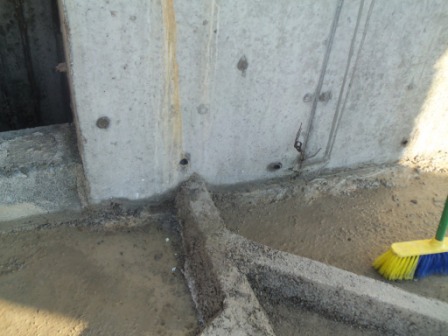
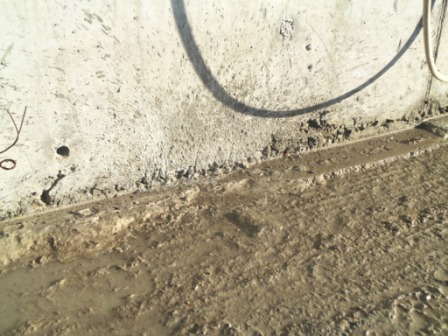
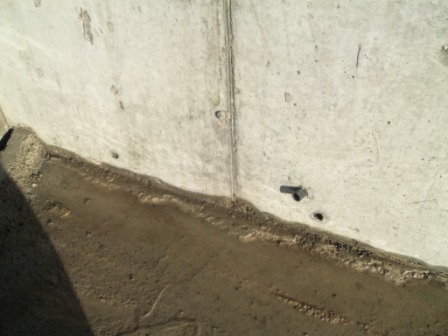
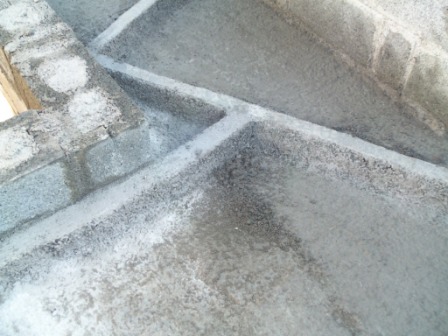
As a QC Engineer during  Plastering inspection, I did observe following points that I will escalate to site team for their quick action and to achieve the required degree of quality.
1. Lighting arrangement is not proper resulting poor visibility.
2. Marked profile not to line & plumb in some places.
3. Key coat provided above false ceiling level where C-8 paint to come.
4. BRC key coat to be provided over concrete & on mesh at concrete to the block-wall joint. 
5. Cement and comix bags to be kept in dry place.
6. Concrete surface are left unattended for applying BRC key coat, for a proper curing on the key coat
    it’s better not to discontinue the key coat, both type of key coat (Cement: Sand on block work and BRC on
    concrete face)  to be completed same day for proper curing and to avoid delay in work.
7. Lighting arrangement is not proper, Plastering is a finished item without proper lighting its a simple no for 
    inspection to the site team. 
8. Profile not in Plumb,
9. Profile not in line.
10. Sand cement key coat applied over the concrete surface and key coat applied over the suspended ceiling.
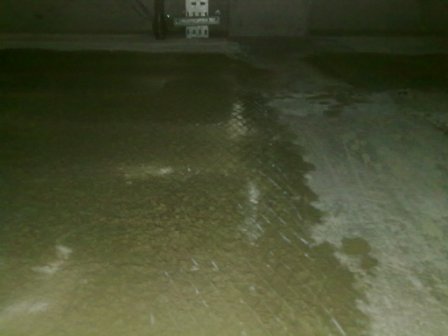
11. Sand Cement key coat provided at concrete to block wall junction.
12. Cement to be kept in dry place.
Posted in Uncategorized

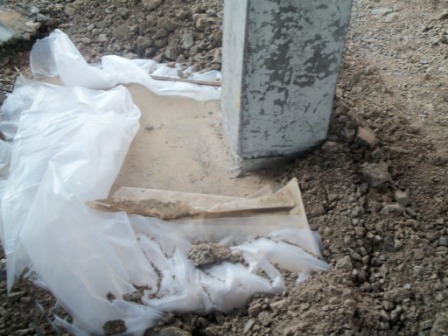
Concrete at Cavity Wall

Cavity wall insulation is used to reduce heat loss through a cavity wall by filling the airspace with a porous material.This immobilizes the air within the cavity (Air is still the actual insulator) thus cavity shall be kept clear of concrete or mortar dropping.Polyethylene sheet can be used as a separation layer.

Posted by Picasa
Posted in Uncategorized

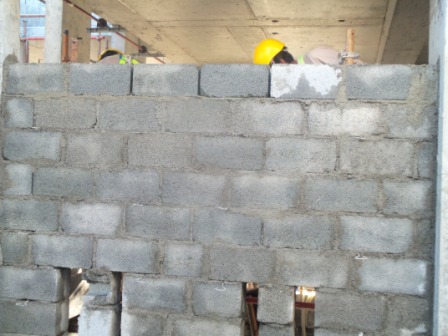
Block Work Quality

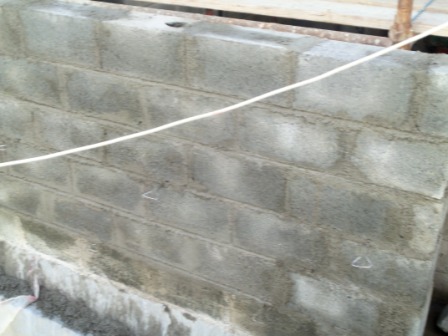
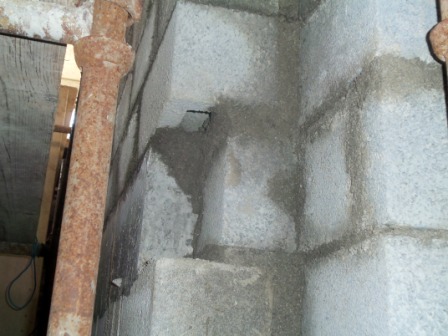
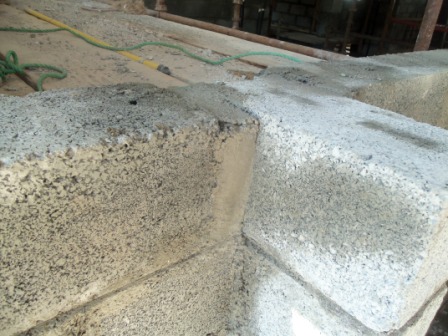
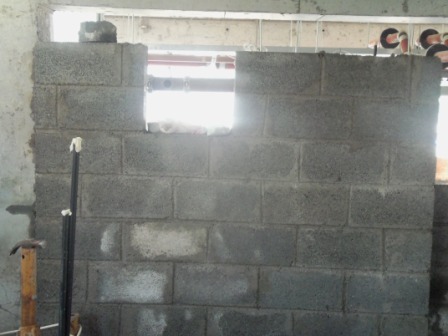
As a QC Engineer during site visit I do observed these kind of non-conformance many time the root cause analysis is too difficult for me, all the masons are trained procedure briefing has been given to them in their speaking language I came to the conclusion its lack of skilled mason, I will escalate my findings to construction team we need experienced masons.

Cavity Wall tie not provided in alternate layer.
Fair face of block not provided at door.
Block not stacked properly.
Lines and Level not monitor properly.
Block not fixed properly and top layer placed.
Stretcher Bond not followed at junction.
Mortar thickness not within tolerance.
Block not placed properly at junction.
Manual cut block used resulting uneven mortar joints.
Curing in block-work not monitored.
Line and Level of joint not monitor properly.
Posted in Uncategorized

Block Work

As a QC engineer during the site visit following Non-Conformance observed in block work and issued to the site team now site team need to close out the nonconformance’s prior to further work at the locations.

Which involves the physical rectification of block-wall along with document confirming that a training has been provided to the masons and the same issue will not be repeated in future.

When multiple minors NCR issued for the same issue then this can be considered a “systemic failure.” it will affect the reputation of the subcontractor which can terminate their contract with us.

1. Cavity wall tie not provided as per specification

2. Joints are not uniform and are not properly filled.

3. Scrabbling not done properly at the column.

1. Cavity wall tie not provided as per specification
2. Joints are not uniform & are not properly filled.
3. Lines are not leveled properly.
4. Scrabbling not done properly at the column.
1. Plaster Metal Lath to be fixed all around the joint.
1. Curing of lintel not being monitored.

2. Mortar for block work to be kept properly and out of direct sunlight to reduce water loss.

3. Block to be stored properly to avoid damage.
Posted in Uncategorized

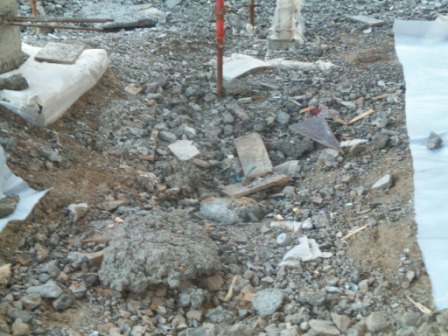
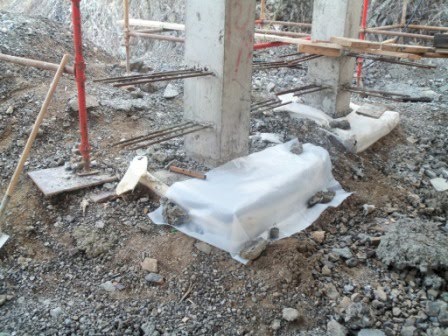
Prior to Backfilling

Back-filling around the structure is going to start, as a QC Engineer I will send the following comments to site team and ask for their actions prior to backfilling.
1. Tie rod holes to be filled.
2. The structure below ground level to be protected.(C-4 Paint and Polyethylene sheet)
3. Waste concrete, Binding Wire, Nails, Wooden Ply, Polythene etc to be removed.
Tie rod holes to be filled and structure to be protected.
Waste concrete, Binding Wire, Nails, Wooden Ply, Polythene etc to be removed.
The structure below ground level to be protected.(C-4 Paint and Polyethylene sheet).
Posted in Uncategorized

Surface Preparation

Why site engineer’s don’t include surface preparation in their activity?

Preparation for Light weight concrete work is going on in checklist items surface preparation always get ignored
site team will be notified to rectify following comments prior to screeding.
Tie rod holes to be filled.
Defect in concrete to be repaired.
Tie rod holes to be filled.
Debris to be removed.
Parapet columns to be casted prior to screed.
Posted in Uncategorized

How important is Surface Preparation before concrete footing.

Non-Conformance in work due to Proper compaction not done for Footing PCC.

Footing and ground structure are designed for ground with an assumed or
known ground bearing pressure, If there is a loose spot at the bottom of the excavation, It must be removed. Levels can be made up with crushed stone, sand or sometimes
low strength concrete.

We generally use concrete as blinding to seal and protect the surface of bearing stratum, this also
provides a firm base for erection, shuttering or block wall true to line and level.

And as our site is near to sea it’s not worth to ignore proper compaction so we will redo it again
after proper preparation.

Posted in Uncategorized

Dome form work

Dome form-work for lobby room, the construction of the centering for domes is more complicated than that of most other types of vaults. Formwork could be two way either horizontal or Radial we have a smaller dome and radial formwork will be easier for us in the picture we are making the mainframe with 21mm wooden ply, which will support two layers of ply sheet which are flexible enough to do the maths.

Dome form-work in place, reinforcement work in progress, Once reinforcement work completed a low slump concrete will be used for the casting.